
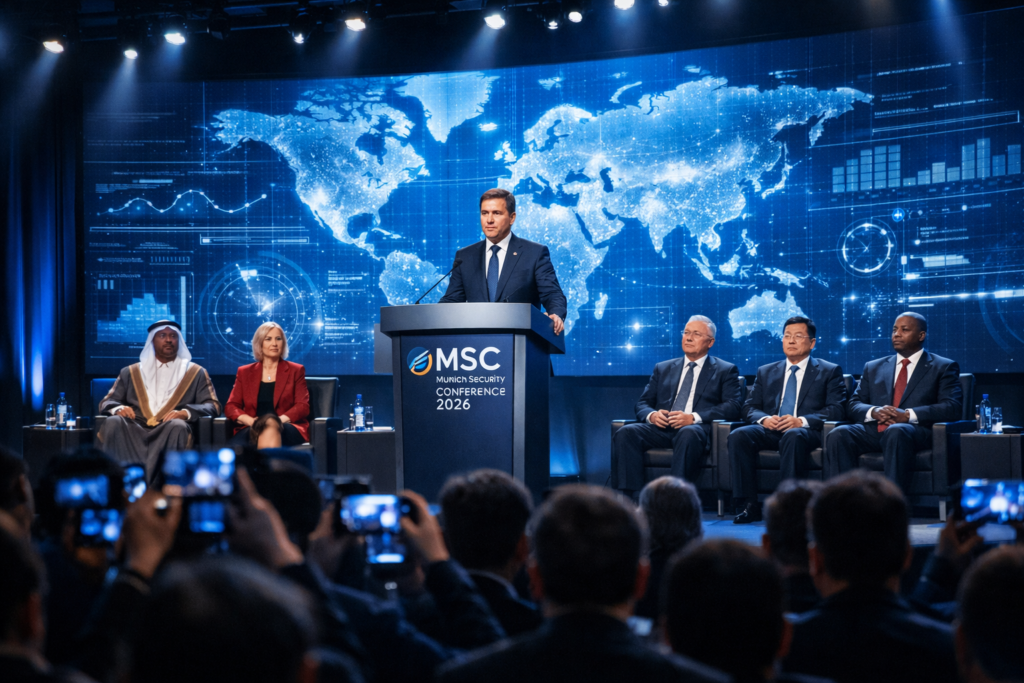
In a pivotal moment for transatlantic relations, Secretary of State Marco Rubio addressed the Munich Security Conference on Saturday, delivering a message of unity tempered by a firm “new world” reality.
While Rubio sought to bridge the gap between Washington and its European allies, the domestic front faced fresh turmoil as a funding deadlock triggered a shutdown of the Department of Homeland Security.
“We Belong Together”: A Shift in Tone
Rubio’s remarks stood in sharp contrast to the 2025 conference, where Vice President JD Vance had sparked unease by lambasting European leaders for their reliance on U.S. support. This year, Rubio struck a more conciliatory note, emphasizing that the U.S. and Europe “belong together.”
However, the Secretary was clear that the “Old World Order” is a thing of the past. He outlined a vision for a revitalized friendship based on shared responsibility:
“We in America have no interest in being polite and orderly caretakers of the West’s managed decline. We want allies who can defend themselves so no adversaries will feel inclined to challenge our collective strength.”
Key Takeaways from the Rubio Doctrine:
- Self-Reliance: Europe must take on more responsibility for regional threats rather than defaulting to American assistance.
- Institutional Reform: Rubio called for “rebuilding” global institutions to reflect modern geopolitical shifts.
- Cultural Pride: He urged allies to be “proud of their culture and heritage” and willing to defend it alongside the U.S.
| Topic | 2025 Approach (Vance) | 2026 Approach (Rubio) |
|---|---|---|
| Tone | Confrontational / Critical | Conciliatory / Urgent |
| Alliances | Questioned U.S. involvement | Affirmed “We belong together” |
| Expectations | Harsh demands for spending | Call for “revitalizing” friendship |
Crisis at Home: DHS Shutdown
As diplomats met in Munich, a crisis unfolded back in Washington. The U.S. Department of Homeland Security (DHS) officially shut down today after a deeply divided Congress failed to agree on a funding deal.
The impasse centers on a push by Democrats for significant reforms to federal immigration enforcement. While a counterproposal is currently being drafted to present to the White House and GOP lawmakers, the shutdown leaves thousands of federal employees in limbo and adds a layer of domestic instability to the U.S. delegation’s presence abroad.
The “Shadow Delegation”
Adding to the tension in Munich is a group of high-profile Democrats, including California Governor Gavin Newsom and Rep. Alexandria Ocasio-Cortez. These leaders have been holding their own meetings with world leaders, presenting an alternative foreign policy vision and acting as a counterweight to the Trump administration’s “New Era” rhetoric.
Governor Newsom reportedly told world leaders that the U.S. currently resembles a “wrecking ball” on the international stage, highlighting the deep political fractures following the American delegation to Germany.
What do you think of Rubio’s “new era” of diplomacy? Let us know in the comments below.

